Lead Flashing & Leadwork Chelmsford
Lead flashing and leadwork repairs that help keep roof details weather-tight and functioning properly.
Lead Flashing & Leadwork for Chelmsford Properties
Lead flashing and leadwork are important parts of roof detailing where different materials meet. This page explains when those areas may need attention, how they are checked, and how suitable repairs or replacement are scoped.
If flashing has started to fail, the right response depends on what has changed, how far the issue has progressed, and whether a local repair will be enough. A careful assessment helps identify the most practical option before any work is specified.
Good leadwork is about managing vulnerable junctions in a roof system, not just covering a visible gap. When those details are sound, they help direct water away from openings and reduce the chance of moisture entering the structure.
Where lead has moved, split, or lost its fixing, the problem may show up in more than one place. That is why a proper roofing review looks at the flashing itself and the surrounding details together.
A small defect can sometimes be resolved with a targeted repair, but the surrounding condition still matters. If the substrate, mortar, or adjacent roofing has also deteriorated, the repair may need a broader scope to be durable.
The aim is to match the work to the condition found rather than defaulting to replacement. That approach helps avoid unnecessary disruption while still addressing the source of the issue.
Lead flashing and leadwork can be relevant wherever a roof has sensitive junctions that must stay sealed. The exact remedy depends on whether the lead is still serviceable, whether it has failed at a joint, or whether the detail has become unsuitable as a whole.
By identifying the specific problem first, the roofing work can be planned with clearer expectations. That makes it easier to choose between repair, renewal, or a more complete leadwork solution.
Leadwork is assessed alongside the other details covered by our roofers covering Chelmsford.
Leadwork and Flashing Topics at a Glance
- Roof survey and visible-condition check
- Clear explanation of the likely cause
- Appropriate material and access considerations
- Written quotation for the proposed scope
How We Assess Lead Flashing
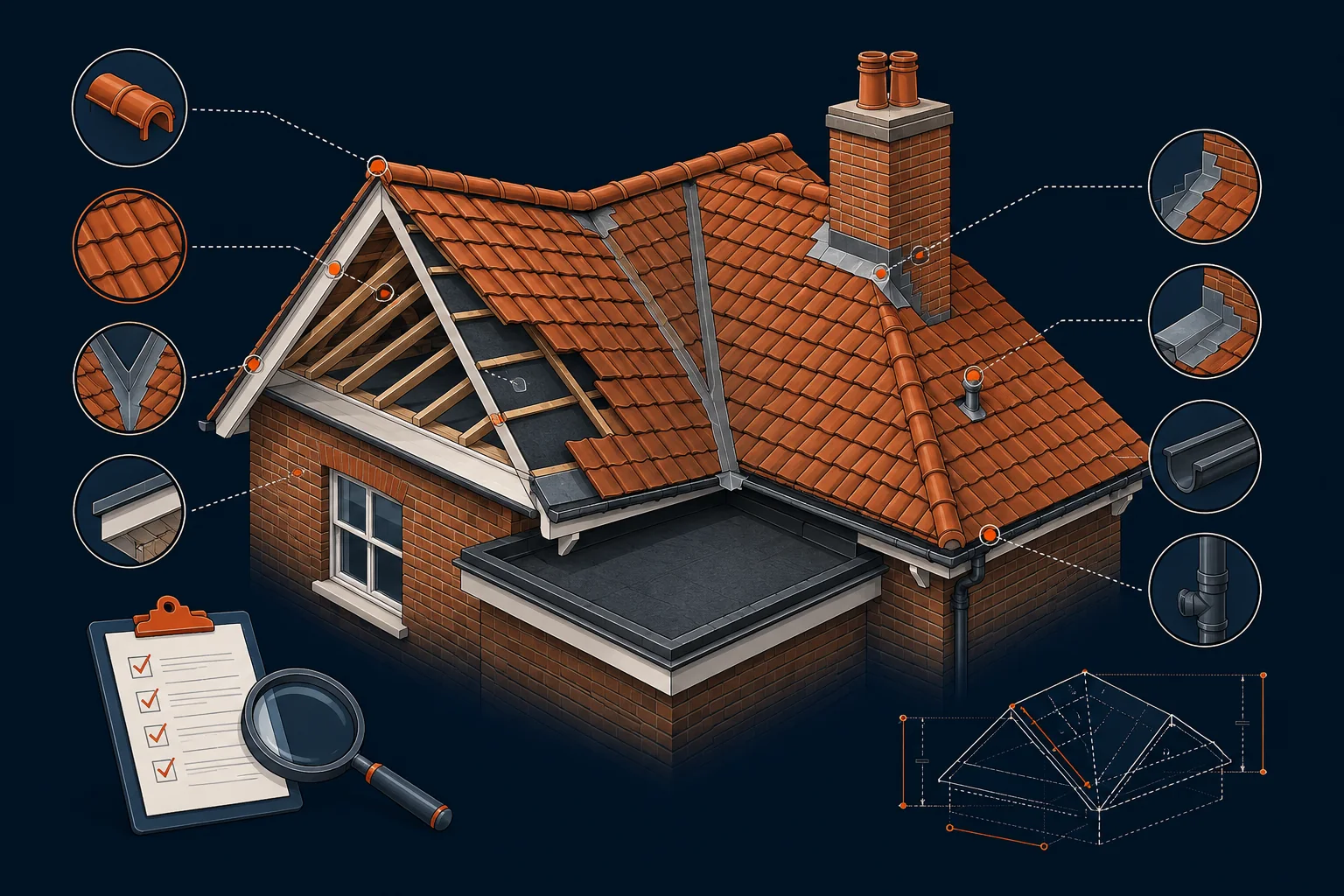
Before any repair or replacement is specified, the flashing should be checked in context. That means looking at the lead itself, the adjoining roof materials, the fixings, the condition of nearby junctions, and any signs that water has been tracking beyond the visible defect.
The assessment should also consider whether the issue is isolated or part of a wider pattern of wear. A clear diagnosis helps separate a straightforward repair from work that needs a larger or more permanent scope.
Inspect before specifying the work
A close inspection helps distinguish surface wear from a problem that affects the whole detail. Cracking, movement, poor laps, or failed pointing can all point to different causes and different remedies.
The value of inspection is that it reduces guesswork. Once the failure mode is understood, the recommended work can be based on what is actually needed rather than on appearance alone.
Some flashing defects are cosmetic at first but become significant if they allow water to enter repeatedly. Others show a clear structural weakness from the outset and are unlikely to improve without intervention.
Checking the surrounding roof area helps reveal whether the leak path starts at the flashing or whether another part of the roof is contributing. That context is important when deciding how much work to carry out.
The best specification comes from seeing the leadwork in place, not just from hearing about the symptom. A roof inspection can reveal whether the detail has slipped, opened, split, or been affected by previous patching.
If there are multiple affected areas, each one may need a slightly different response. Identifying those differences early helps keep the proposed work accurate and practical.
What guides the quotation
A quotation for lead flashing work should follow the condition found on site. The likely extent of the repair, the materials needed, any preparation, and the access involved all influence the final scope.
Where the defect is limited, the quote may focus on a local repair. Where the detail has reached the end of its serviceable life, the quotation may instead cover renewal or a more comprehensive leadwork package.
Assessment focus
- Inspect laps and fixings
- Allow for lead movement
- Check the complete junction
Written scope
- Visible condition
- Safe access
- Material specification
- Relevant exclusions
Lead Flashing Repairs and Roof Leadwork
Lead flashing and leadwork can range from minor repairs to more substantial renewal, depending on what the inspection shows. The right scope is guided by the condition of the existing lead, the surrounding roof materials, and whether the detail can still be relied on after repair.
A suitable response should be proportionate to the fault. If the lead is sound apart from a local issue, a focused repair may be enough; if the detail has failed more widely, replacement may be the more dependable option.
Repairs are most effective when the problem is clearly defined and the surrounding materials remain serviceable. That can include resecuring, renewing a short section, or correcting a local defect that has not spread.
Where work is kept to the affected area, the result is often less disruptive and easier to plan. The key is making sure the repair addresses the cause of the failure, not only the visible symptom.
If the leadwork has deteriorated across a larger section, a partial fix may not hold for long. In those cases, renewal of the affected detail can be a more practical use of the repair budget.
A careful roof assessment helps decide whether the issue is localised or cumulative. That distinction matters because leadwork often fails gradually, not all at once.
- The lead detail, laps and surrounding roof junction are assessed together.
- Limited splits may allow a focused repair where the remaining lead is still sound.
- Widespread fatigue or unsuitable detailing may make replacement the more dependable option.
What Lead Flashing Does
Lead flashing is designed to form a weather-resistant detail where two roof elements meet. It helps bridge junctions that would otherwise be vulnerable to water entry.
Because those transitions are exposed to movement and weathering, the flashing must remain secure and correctly formed. Its job is to keep the detail sealed while allowing the roof to function normally.
When lead flashing is shaped and fixed correctly, it supports the integrity of the roof detail around it. Problems often arise when the metal can no longer accommodate movement or when the surrounding materials begin to loosen.
For that reason, flashing should be treated as part of the whole junction rather than as an isolated strip of metal. Its performance depends on how well it works with the adjacent roof components.
Good lead detailing helps protect the most vulnerable parts of a roof. It is often used where changes in level or material create a point that must stay sealed over time.
If the detail becomes distorted, worn, or poorly supported, its ability to shed water can be reduced. That is when inspection and timely repair become important.
- Abutment flashing where a roof slope meets a wall
- Soakers and cover flashing beneath individual tiles or slates
- Aprons and transition pieces around changes in roof level
Signs Leadwork Has Failed
Signs of failed leadwork can include visible splits, lifted edges, staining, or damp appearing near a junction. Those clues do not always prove the exact cause, but they do indicate that the detail deserves a closer look.
If the problem is left unresolved, water may continue to find its way into the same area. Early attention makes it more likely that the work can stay limited to the affected detail.
A leak near lead flashing does not always mean the lead is the only issue, but it should be checked promptly. Movement in the roof, ageing mortar, or a failed joint can all contribute to a loss of weather-tightness.
Because the symptoms can overlap, the most useful approach is to inspect the detail rather than guess at the remedy. That helps avoid replacing something that could still be repaired, or repairing something that should really be renewed.
Where leadwork has visibly opened up or split, the risk is usually that water can track behind the surface before the problem becomes obvious indoors. That is why minor-looking defects can still matter.
A thorough inspection can show whether the damage is isolated or part of a wider failure around the same junction. The scope should follow that finding, not just the most visible damage.
- Cracks, tears or fatigue lines across the lead sheet
- Lifted edges, loose wedges or open mortar chases
- Water marks associated with an abutment or lead-covered junction
Repair or Replace Lead Flashing?
Whether lead flashing should be repaired or replaced depends on how far the defect has spread and how sound the remaining detail is. If the lead is otherwise serviceable, a targeted repair may be enough.
If the metal is fatigued, repeatedly failing, or badly deformed, replacement may give a more reliable result. The decision should be based on condition, not on choosing the smallest possible job by default.
A repair is usually most appropriate when the cause is local and the rest of the leadwork is still performing well. That can preserve useful material while solving the immediate problem.
Replacement becomes more sensible when repeated repairs would only delay the same failure. In those cases, a new detail can be the clearer long-term option.
The choice between repair and renewal should reflect both performance and practicality. A roof detail that has reached the limit of repeated patching may be more economical to replace than to keep revisiting.
By contrast, a contained fault with stable surrounding materials can often be dealt with more simply. The inspection should guide that judgement so the work matches the actual condition.
It is usually better to specify the least intrusive work that will still resolve the fault. That means checking whether the lead can be repaired cleanly, or whether the damage is extensive enough to justify replacement.
This approach keeps the decision tied to the roof’s condition. It also helps produce a more realistic scope, because leadwork decisions often depend on what is found once the detail is inspected properly.
- Extent and position of splitting or mechanical damage
- Suitability of the existing lead code, sheet length and laps
- Condition of the wall chase and adjoining roof covering
Leadwork at Chimneys and Valleys
Chimneys and valleys are common places for leadwork because they create junctions that need careful weatherproofing. Those details often deserve close attention if a leak is suspected nearby.
Because these areas are exposed to movement and concentrated water flow, small defects can have a noticeable effect. A well-made lead detail helps protect the roof where it is most vulnerable.
Leadwork around chimneys must cope with changes in shape, heat movement, and the surrounding masonry or roofing materials. That makes the quality of the detail especially important.
If the flashing or associated finish has failed, water can enter through a point that may be small but significant. Inspecting the entire chimney junction helps make sure the fix addresses the actual weak point.
Valleys collect and direct a lot of water, so the lead detail there needs to remain sound and well formed. Any defect in that area can affect how efficiently the roof sheds water.
Because valley leadwork is so exposed, wear may show up as splitting, opening joints, or signs of water tracking. Careful checking is important before deciding on repair or renewal.
- Confirm whether the issue sits at a stack, valley or general abutment
- Check how the lead connects with tiles, slates and masonry
- Define the leadwork boundary clearly within the written scope
A Written Scope for Roof Leadwork
Condition
The condition of the existing leadwork is the starting point for any recommendation. Its age, movement, fixing, and visible wear all help determine whether the detail still has life left in it.
A sound-looking finish is not always enough on its own. The assessment should also consider whether the lead is performing properly under weather exposure and whether any hidden deterioration is present.
Access
Access can affect how lead flashing work is carried out, especially where the detail is high, awkward, or closely tied into other roof elements. Safe access is part of planning the job properly.
Where access is more restricted, the scope may need to allow for additional setup or a more carefully staged approach. That helps the work proceed in a controlled and practical way.
Specification
The specification should describe what is being repaired or renewed, how much of the detail is included, and what materials or preparation are required. Clear wording reduces uncertainty about the work to be done.
It should also reflect any limitations found during inspection. If the roof detail needs only a local intervention, the specification should stay focused; if the failure is broader, the scope should expand accordingly.
Lead Flashing & Leadwork FAQs
A lead soaker is a small piece of lead used to help manage water at a roof junction, often where one roof surface meets another detail. It forms part of the weathering arrangement rather than acting as a standalone fix.
Its purpose is to help guide water safely away from vulnerable points. If it is damaged, misplaced, or not fitted correctly, the junction can become more prone to leaks.
Lead flashing can split for several reasons, including movement in the roof, age-related fatigue, poor support, or repeated stress at the same point. Once a split appears, the detail may no longer keep water out reliably.
The best next step is usually an inspection of the full junction. That helps show whether the split is isolated and repairable or whether the surrounding leadwork is also failing.
Lead flashing can sometimes be patched if the defect is small and the rest of the detail is still sound. A patch is only useful when it forms a lasting repair and does not hide a wider problem.
If the lead is widely worn or repeatedly opening up, patching may only be a temporary measure. In those cases, a fuller repair or replacement is usually the better option.
Code of lead is a way of describing the thickness or weight category of the lead used for roofing work. The code helps ensure the material is suitable for the detail it is being used on.
Choosing the right code matters because flashing must balance durability with the movement expected at the junction. A specification should match the application rather than relying on a one-size-fits-all approach.
Ask about lead flashing & leadwork
A written quotation for lead flashing work should follow a proper inspection, because the final scope depends on what the roof detail actually needs. If the lead can be repaired locally, the quote should reflect that narrower job.
Where the issue is more extensive, the quotation may need to include renewal, preparation, access, and any associated roofing work. Clear findings make it easier to price the work in line with the condition discovered.
That way, the proposal reflects the materials, labour, and extent of the job rather than a guess based only on the visible symptom.
If you need lead flashing or leadwork assessed, the most useful first step is to arrange a proper roof inspection and discuss what has been observed. A clear review helps separate minor repair work from a more involved renewal.
Once the condition is understood, the recommended scope can be set out more confidently in writing. That gives you a clearer basis for deciding how to proceed with the roof detail in question.