Flat Roofing Chelmsford
Flat roofing services that protect your property and make the next step clear.
Flat Roofing for Chelmsford Properties
Flat roofing is often relevant when a roof needs repair, replacement or a more suitable material choice. This page explains how the service is assessed, what may guide the work and how a written scope can be set out clearly.
For Chelmsford properties, the key question is usually not just whether a roof needs attention, but what approach fits the condition found. A careful review helps distinguish a targeted repair from a fuller replacement or specification change.
A flat roof should be considered in terms of condition, use and existing detailing rather than by appearance alone. Small defects can sometimes be addressed directly, while wider wear or repeated failure may point to a more involved solution.
Customers benefit from a service that starts with what the roof is doing now and then matches the response to that evidence. That approach helps keep the work proportionate and easier to understand.
Where the roof is still broadly sound, a focused repair may be enough to restore performance in the affected area. The aim is to deal with the cause of the problem, not only the visible symptom.
If the roof shows broader deterioration, the right answer may be replacement or a revised specification. Clear advice at this stage helps avoid short-term fixes that do not suit the roof’s overall condition.
Different flat roofs can call for different methods, so the most useful guidance is based on what is actually on site. Material choice, detailing and the extent of wear all influence the final recommendation.
A practical service should leave you with a clear explanation of the options and the reasons behind them. That makes it easier to decide whether to repair, renew or consider a different roof build-up.
For pitched-roof, repair and roofline work, see our complete flat-roof and roofing services in Chelmsford.
Flat Roofing Options at a Glance
- Roof survey and visible-condition check
- Clear explanation of the likely cause
- Appropriate material and access considerations
- Written quotation for the proposed scope
How We Assess a Flat Roof
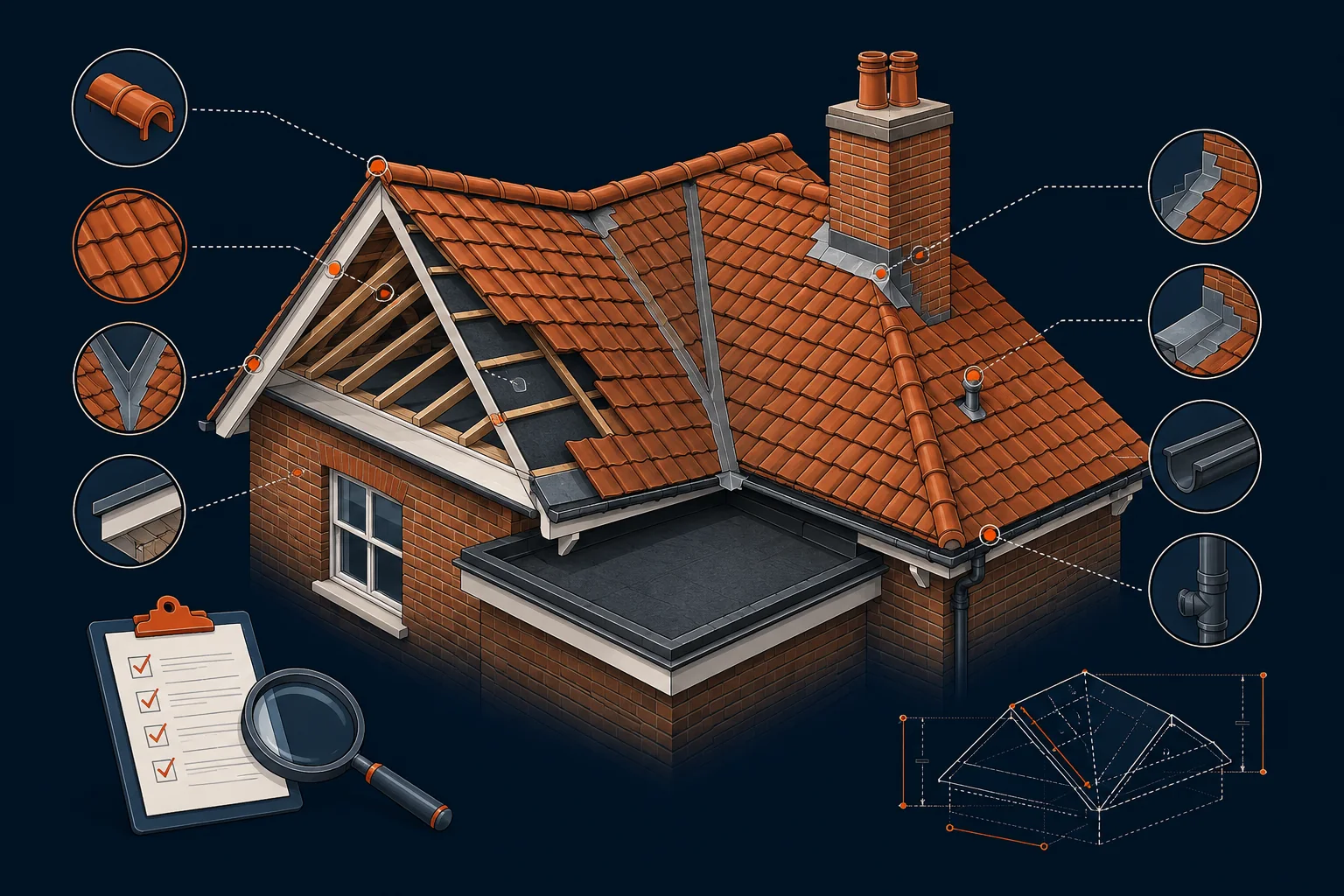
Before any repair or replacement is specified, the roof should be assessed as a whole. That means looking at the visible condition, likely sources of water entry, the existing material, and any details that affect how the roof performs.
A good assessment also considers whether the issue is localised or part of wider deterioration. Once those points are understood, the work can be scoped in a way that matches the roof’s actual needs.
Inspect before specifying the work
Inspection should begin with the areas most likely to be causing trouble, including joins, edges and any points where water may find a way in. This helps separate surface wear from faults that affect the roof’s function.
It is also useful to note whether the problem is stable or progressive. A small defect that is spreading may need a different response from one that has remained limited to a single area.
The roof covering should be checked for signs of age, cracking, splitting, lifting or other visible change. Those details help indicate whether the issue is isolated damage or part of a wider pattern.
A careful inspection should not stop at the top layer. The condition of adjoining details can matter just as much when a roof is being judged for repair or renewal.
Where access is limited, the inspection still needs to be sufficient to support a sensible recommendation. The aim is to gather enough information to specify work properly rather than guessing at the cause.
If more than one issue is present, each should be considered separately and then as part of the whole roof. That avoids over-treating one problem while leaving another unresolved.
What guides the quotation
A quotation should reflect what has been found, not a generic assumption about the roof. The condition, extent of work and any material or detailing choices all help shape the price and the scope.
It is usually best when the written quote explains what is included and why the proposed work suits the roof observed on site. That makes the proposal easier to compare and approve.
Assessment focus
- Check the membrane and deck
- Review falls and outlets
- Match the system to the roof
Written scope
- Visible condition
- Safe access
- Material specification
- Relevant exclusions
Flat Roof Repairs, Replacement and Materials
Flat roof work can range from a minor repair through to a full replacement, depending on what inspection shows. The right scope is the one that addresses the actual condition, not just the most obvious symptom.
Materials and method should follow the roof’s needs. A well-scoped response takes account of deterioration, detailing, access and the level of work needed to restore reliable performance.
Repairs are generally most suitable when the defect is localised and the rest of the roof remains serviceable. In that situation, the goal is to correct the fault without disturbing sound parts of the roof.
Where wear is more widespread, repair may only delay a larger decision. A clear assessment helps show when patching is sensible and when renewal would be the more practical route.
Replacement becomes more relevant when the roof has reached a stage where problems are recurring or the overall condition no longer supports a dependable repair. That is often the point at which a broader solution becomes more cost-effective in practical terms.
A replacement should be specified with the roof’s current state in mind, including any details that affect drainage, weathering or long-term performance. The work should be planned as a complete response, not a series of disconnected fixes.
- The covering, deck, drainage falls and perimeter details are assessed as one roof system.
- EPDM, GRP and felt are compared against the roof shape and existing substrate.
- The written scope should distinguish a local repair from replacement of the wider build-up.
Flat Roof Repair
A repair should start with the cause of the leak or defect, because treating the visible mark alone may not solve the problem. The most useful repair is the one that addresses the entry point and any surrounding weakness.
Good repair advice also considers whether the surrounding roof is likely to remain stable after the work. If not, the repair may need to be paired with a wider recommendation.
Even a small leak can indicate a weakness in the roof’s joints, edges or surface condition. That is why a repair is best based on inspection rather than on the place where water first becomes visible indoors.
A sensible repair plan aims to restore function with the least disruption needed to achieve a durable result. It should leave the roof better able to cope with normal weather exposure.
If a roof has several faults, repairing one area may not be enough to solve the underlying issue. In those cases, the roof should be considered as a whole so that the recommended work matches the scale of the problem.
The most effective repair is usually one that is proportionate, targeted and supported by clear findings. That reduces the chance of repeat call-backs for the same defect.
- Isolate the defect and confirm the membrane remains serviceable nearby
- Check accessible deck areas for softness, movement or trapped moisture
- Reinstate compatible edges, outlets and junctions around the repaired area
Flat Roof Replacement
Replacement is the logical option when the existing roof covering is too worn or too compromised to justify further patching. At that stage, the focus shifts from short-term correction to dependable renewal.
A replacement specification should set out the scope clearly so the work can be understood before it starts. That helps ensure the chosen solution suits both the roof and the property.
The best replacement approach depends on what the inspection reveals about the current roof. Factors such as condition, access and the surrounding details all influence how the new work should be planned.
A full renewal should not be treated as a one-size-fits-all task. The specification should reflect the roof’s existing build-up and the performance you want from the new surface.
Where renewal is needed, the objective is to move from a failing roof to one that is easier to maintain and more consistent in service. That requires a method chosen for the property, not just for convenience.
A clear replacement proposal should describe the intended work in straightforward terms. When the scope is easy to follow, it is easier to see what is being provided and why.
- Remove or prepare the existing covering to an agreed specification
- Repair the deck and form dependable falls towards outlets
- Install compatible upstands, edge trims and perimeter details
EPDM, GRP and Felt Compared
EPDM, GRP and felt each suit different priorities, so the most suitable choice depends on the roof and the result you want. Comparing them properly means looking at their practical characteristics as well as the roof they will cover.
Rather than choosing by name alone, it is better to match the material to the existing condition, the detailing needed and the type of finish required. That is what makes the final recommendation more reliable.
One material may be better suited to a straightforward renewal, while another may be more appropriate where detailing or finish is the main concern. The right answer comes from the roof’s requirements, not from a fixed preference.
A comparison should help explain how each option performs in broad terms and where it may fit best. That gives customers a clearer basis for deciding which route is most practical.
The value of a material comparison is in understanding how the options differ in application and suitability. That includes how each may suit the roof’s shape, condition and expected use.
A useful recommendation does not need to oversell one system. It should explain the benefits and limitations of each option so the choice is grounded in the property’s needs.
No single flat-roof material is automatically best for every job. The right result comes from choosing a system that fits the roof’s current condition and the level of work being undertaken.
When the options are compared carefully, it becomes easier to see which material aligns with the roof’s existing details and the intended outcome. That makes the specification more purposeful.
A sensible comparison should also account for future maintenance expectations. Different materials may suit different levels of intervention over time, so the chosen option should match the owner’s practical priorities.
The most appropriate system is the one that can be specified confidently for the roof in front of you. That is why inspection and material choice should go hand in hand.
- EPDM provides a flexible sheet system with carefully formed seams
- GRP creates a rigid laminated surface with compatible trims
- Felt uses layered bituminous membranes built into a weathered system
Ponding, Leaks and Roof Coatings
Ponding water should be taken seriously because it can point to drainage or fall issues on the roof. Even when it does not cause immediate failure, it may show that the roof is not shedding water as effectively as it should.
The right response depends on whether the ponding is minor and stable or part of a broader defect pattern. A proper assessment helps decide whether adjustment, repair or replacement is the more suitable step.
Leaks are often the most visible sign of a problem, but the source can be elsewhere on the roof. That is why the visible damp patch should be treated as a clue rather than the whole diagnosis.
A roof may also suffer from more than one issue at once, with ponding, worn joints or surface breakdown all contributing. Looking at the complete condition gives the best chance of choosing the right remedy.
Roof coatings can have a place in some circumstances, but only when the existing roof is suitable for that approach. They are not a cure-all for roofs that are too damaged or too unstable for surface treatment alone.
The condition of the roof should decide whether coating is worth considering. If the underlying surface is in poor shape, a more substantial solution is usually the better option.
A coating should be viewed as one possible response, not the default answer to every ageing roof. Its usefulness depends on the roof being sound enough for the treatment to perform as intended.
Where the roof has deeper defects, coating may not address the real cause of failure. In that case, a repair or replacement specification is likely to be more appropriate.
- Clear and test outlets before assuming the membrane itself has failed
- Check whether falls, settlement or edge details are retaining water
- Use a coating only where the existing surface and moisture condition are suitable
Insulation and Expected Service Life
Insulation matters because a flat roof should be judged as a complete build-up, not just a visible covering. The way the roof is insulated can influence how it performs and what work makes sense.
If a roof is being renewed, insulation may be part of the specification where appropriate. That can make the final solution more coherent, especially when the existing roof is already being opened up.
A replacement project is a natural point to consider whether the roof’s make-up still suits the property. When insulation is included thoughtfully, it can support a more considered overall specification.
The expected service life of a flat roof depends on more than the covering name alone. Condition, detailing, installation quality and maintenance all play a part in how long a roof remains dependable.
That is why an informed recommendation looks at the roof’s actual state rather than assuming all roofs of the same type age in the same way. The assessment should support a realistic view of what comes next.
A roof that is still performing well may need only minor intervention, while a roof showing repeated defects may be closer to renewal. Service life is therefore best judged by evidence on site, not by age alone.
When the roof is assessed properly, it becomes easier to decide whether the most sensible plan is to continue with targeted repairs or move toward replacement. That keeps the advice practical and proportionate.
- Provide appropriate vapour control for the selected roof build-up
- Maintain insulation continuity without blocking required drainage or ventilation
- Protect service life through clear outlets, sound details and planned maintenance
A Flat-roof Specification Built Around the Property
Condition
Condition is the starting point for any recommendation because it determines what the roof can reasonably support. Visible wear, repeated leaks and general deterioration all help indicate the level of work likely to be needed.
A clear condition review makes it easier to avoid both under-specifying and over-specifying the job. The goal is to match the proposed work to the roof’s present state.
Access
Access affects how the roof can be inspected, repaired or replaced, and it should be considered early in the process. Practical access can influence both the approach and the way the work is planned.
Where access is more restricted, the scope may need to be organised more carefully. That helps ensure the quoted work reflects the real conditions on site.
Specification
Specification is where the findings are turned into a clear plan of work. It should describe what will be done, why it is needed and how it relates to the roof’s condition.
A good specification keeps the recommendation focused and understandable. That makes it easier to see how the proposed solution answers the issue identified during inspection.
Flat Roofing FAQs
Yes, a leaking flat roof can often be repaired if the problem is localised and the rest of the roof is still serviceable. The key is to identify the source of the leak before deciding on the remedy.
If the leak is part of broader deterioration, repair may only be a temporary measure. In that case, the roof should be assessed for whether a fuller solution would be more appropriate.
None of EPDM, GRP and felt is automatically best in every situation. The right choice depends on the roof’s condition, the details involved and the result you want from the work.
A sensible comparison looks at suitability rather than brand preference. That way, the chosen material fits the roof instead of forcing the roof to fit the material.
Yes, ponding water can be a problem because it may indicate that the roof is not draining as intended. It can also contribute to ongoing wear if it remains after rainfall.
Whether it is serious depends on extent, duration and the roof’s overall condition. A proper inspection helps decide if the issue is minor, structural or part of a wider repair need.
A coating may help in some cases, but it is not a universal fix for an old flat roof. It only makes sense when the existing roof is suitable for that type of treatment.
If the roof is badly worn, coated surfaces may not overcome the underlying defects. A repair or replacement recommendation is often more reliable when the roof has deeper problems.
Yes, insulation matters because it is part of how the roof performs as a complete system. When a roof is renewed, the insulation arrangement may need to be considered alongside the covering.
Ignoring insulation can leave the specification incomplete where a fuller renewal is being planned. A well-considered project looks at the roof as a whole, not just the visible finish.
Ask about flat roofing
A written quote should follow the inspection findings, so the proposed work reflects the roof’s actual condition. That means the scope can vary depending on whether the job is a repair, a replacement or a more specific material choice.
Access, materials and the amount of work needed all influence the final quotation. When those points are set out clearly, it is easier to understand what is included and how the recommendation has been formed.
If you need flat roofing help, the most useful next step is to have the roof assessed and the findings translated into a clear written scope. That gives you a practical basis for deciding how to proceed.
Chelmer & Slate can help explain the options in straightforward terms so the work is matched to the roof’s condition and the result you want.