Fascias, Soffits & Guttering Chelmsford
Chelmer & Slate provides fascias, soffits and guttering services that help protect your roofline and keep rainwater moving away properly.
Fascias, Soffits & Guttering for Chelmsford Properties
Fascias, soffits and guttering all play a practical role in protecting the roof edge and managing rainwater. When these parts begin to fail, small defects can lead to dampness, staining or repeated leaks, so a clear inspection is the best place to start before deciding on repair or replacement.
A sensible roofline service begins with identifying what is actually worn, loose or damaged. That may mean a minor repair to a joint, a section replacement, or a more complete renewal if several parts are no longer performing as they should.
Customers often need guidance when the problem seems localised but the visible symptoms are broader. Careful checking helps separate isolated faults from wider deterioration, so the recommended work matches the real condition rather than a guess.
The goal is to keep the roof edge tidy, weather-resistant and able to channel water safely into the drainage system. Good roofline work should resolve the immediate issue while also reducing the chance of recurring problems in the same area.
See how roofline work fits alongside our broader Chelmsford roof repair and roofline services.
Roofline and Guttering Work at a Glance
- Roof survey and visible-condition check
- Clear explanation of the likely cause
- Appropriate material and access considerations
- Written quotation for the proposed scope
How We Assess Fascias, Soffits and Guttering
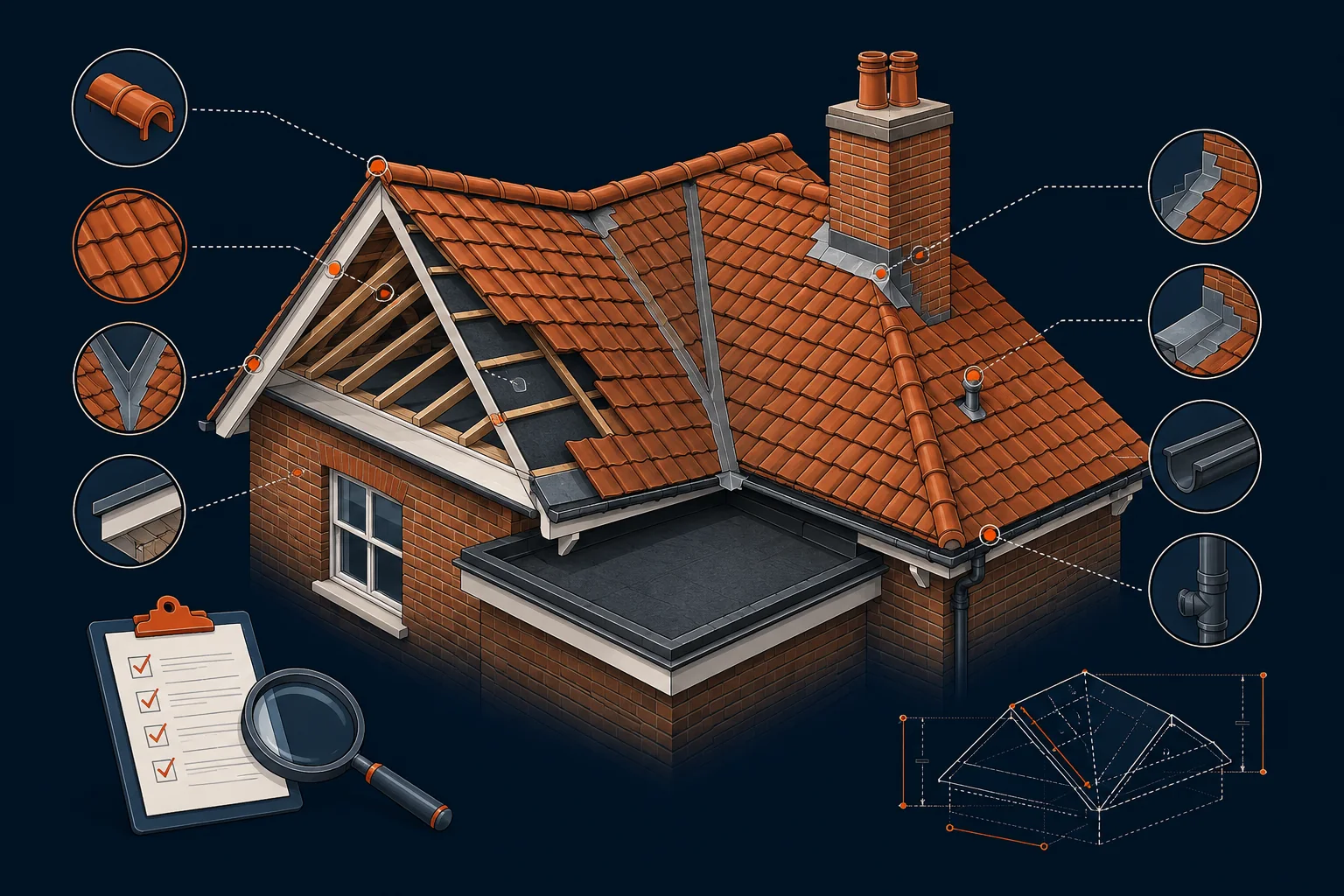
Before any repair or replacement is specified, the roofline should be assessed for the condition of the boards, fixings, joints and outlets. It is also important to check whether water is escaping because of a blockage, a failed connection or wear in the surrounding components.
Inspect before specifying the work
Inspection should start with the visible parts of the roofline and rainwater system. Signs of movement, cracking, staining or separation can indicate where water is entering or where a section is no longer supporting the system properly.
A good assessment also considers whether the issue is being caused by one weak point or by several related defects. That distinction matters because a single damaged section may be repairable, while repeated failures can suggest a wider replacement is more appropriate.
The inspection should be detailed enough to support a clear recommendation. Once the condition is understood, the next step is to define the work in a way that matches the problem and avoids unnecessary disruption.
What guides the quotation
A quotation should reflect the extent of the defect, the amount of material involved and any preparation needed before the work can begin. The more clearly the fault is understood, the easier it is to set out a fair and practical scope.
Assessment focus
- Check the complete roof edge
- Follow the rainwater route
- Protect required ventilation
Written scope
- Visible condition
- Safe access
- Material specification
- Relevant exclusions
Fascias, Soffits and Guttering Services
Roofline and guttering work can range from clearing, repairing and resetting individual parts through to replacing larger sections when condition has declined. The right response depends on what the inspection reveals, because the aim is to solve the cause of the problem rather than just the most visible symptom.
Some jobs are straightforward and only require attention to a specific failed section. Others involve several connected elements, so the scope needs to account for how the fascias, soffits, guttering and downpipes work together as one system.
Good scope guidance also allows for the possibility that hidden deterioration will be found once work begins. If surrounding materials are in worse condition than expected, the recommended approach may need to be adjusted to achieve a durable result.
- Fascias, soffits and bargeboards are checked for sound support, junctions and ventilation.
- Gutter falls, joints and outlets are reviewed across the complete run rather than at one stain alone.
- Downpipes and discharge points are included so rainwater can leave the property correctly.
Fascias, Soffits and Bargeboards
Fascia boards form part of the roofline finish and help support the guttering. If they become damaged, rotten or loose, they can affect both appearance and performance, so replacement or repair should be based on their actual condition.
Soffits sit beneath the roof edge and help close off the underside of the overhang. When they are deteriorated or poorly fitted, the roofline can look untidy and may no longer provide the protection it should.
Bargeboards are another exposed roof-edge component that may need attention where weathering or movement has taken hold. The right repair depends on whether the board can still be retained safely or whether replacement will give a better long-term result.
Because these parts are connected, the scope should not treat them in isolation if the surrounding system is also failing. A joined-up assessment helps ensure the final work is coherent, tidy and suited to the condition found.
Where several roofline components have reached the end of their serviceable condition, a broader replacement may be the most practical route. That decision should come from inspection rather than assumption, especially when the issue is not yet widespread.
- Confirm sound fixing points and the condition of underlying timber
- Maintain suitable airflow through the eaves where ventilation is required
- Form durable corners, joints and connections with the roof covering
Gutter Repair, Gutter Replacement and Downpipes
Gutter repair may be suitable where a joint has opened, a bracket has loosened or a short section has become misaligned. These faults can often be corrected if the rest of the system remains sound.
If the guttering is repeatedly leaking, sagging or no longer carrying water effectively, a more extensive replacement may be needed. The key is to restore a consistent fall and secure connection so water can move away as intended.
Downpipes should also be checked as part of the rainwater system. A blockage, leak or poor connection in the vertical run can cause overflow higher up, even when the gutter itself appears to be in fair condition.
The best repair plan considers the whole flow path from roof edge to drain. That approach helps prevent a situation where one small fix is made while the underlying cause of the overflow is left unresolved.
Where access is limited or the system is installed at height, the method of working may affect the recommended scope. Safe, practical access is part of planning the job properly and should be considered alongside the condition of the components.
- Check falls, brackets, seals and joints along the gutter length
- Confirm capacity and condition at outlets and changes in direction
- Trace downpipes to a suitable discharge point away from vulnerable masonry
Signs of Roofline Failure
Common signs of roofline failure include overflow, staining, visible gaps and sections that appear loose or distorted. These symptoms often point to a problem with alignment, blockage or material breakdown.
Peeling finishes, cracked boards and persistent damp marks can also suggest that moisture is reaching places it should not. Even if the issue seems small at first, it is worth checking before the defect spreads further.
If water is repeatedly escaping from the same area, the system is telling you that something is no longer working properly. In that situation, a targeted inspection is more useful than waiting for the problem to worsen.
- Staining, dripping or regular overflow beneath gutter joints
- Sagging runs, loose brackets or movement at roofline connections
- Soft timber, peeling finishes or open fascia and soffit joints
Repair or Replace the Roofline?
Whether to repair or replace the roofline depends on the extent of wear and the condition of the surrounding parts. A repair can be enough when the fault is local, but replacement becomes more sensible when deterioration is repeated or widespread.
The age of the issue matters less than the pattern of failure. If several sections are affected or the same defect keeps returning, a larger scope may offer better value and reliability than repeated patching.
A replacement decision should be based on serviceability, not appearance alone. Some parts can look acceptable while still being weak, and others may look untidy yet remain repairable once properly assessed.
Clear advice should explain why one option is being recommended over another. That makes it easier to choose a solution that suits the current condition and avoids unnecessary work.
- Local repair for a failed seal, bracket or short sound section
- Partial replacement where damage is confined to one run or elevation
- Wider renewal where decay, movement or poor falls affect the complete system
Scoping Roofline and Rainwater Work
Condition
Condition is the starting point for any roofline recommendation. Once the boards, joints and rainwater components have been checked, the work can be set out according to what is actually required.
Access
Access can influence how the job is carried out and how much of the roofline can be reached safely. If the area is awkward to work on, that needs to be built into the plan from the outset.
Specification
Specification should describe the materials, sections and repair method needed to complete the job properly. A well-defined specification helps keep the work consistent with the findings from inspection.
Fascias, Soffits & Guttering FAQs
Guttering usually overflows when it is blocked, misaligned or unable to carry water away quickly enough. Build-up inside the system, poor falls or leaks at joints can all interrupt the flow and send water over the edge instead.
Yes, a single gutter joint can often be repaired if the surrounding guttering is still sound. The joint should be checked for movement, seal failure or distortion so the fix addresses the actual cause of the leak.
A fascia is the board fixed along the roof edge that helps support the guttering, while a soffit closes off the underside of the overhang. Together they form part of the roofline and help protect the structure at the eaves.
Roofline should be replaced when the components are no longer serviceable, repairs are becoming repetitive or deterioration is affecting several sections at once. At that point, replacement can be the more practical way to restore reliable performance.
Soffits may need ventilation where the roof space design depends on airflow through the eaves. The right arrangement depends on the existing roof structure and should be checked as part of the overall roofline assessment.
Ask about fascias, soffits & guttering
A written quotation should bring together the inspection findings, the access needed to do the work and the materials or sections involved. That way, the scope is based on the actual condition of the roofline and rainwater system rather than a broad assumption.
If you are unsure whether your fascias, soffits or guttering need repair or replacement, the safest approach is to start with an inspection and a clear written scope. That gives you a practical basis for deciding what work is necessary and helps keep the result focused on the problem found.