Chimney Repairs Chelmsford
Chimney repairs that protect your roof, reduce leaks, and keep your property in good order.
Chimney Repairs for Chelmsford Properties
Chimney repairs can become relevant when you notice cracking, loose mortar, damaged flashing, or signs of water entry around the stack. A careful repair approach helps address the cause of the problem rather than only the visible symptom.
For Chelmsford properties, the key is to assess the chimney as part of the wider roof area so the right repair can be specified. That may involve localised maintenance, more extensive remedial work, or advice on whether the issue is best handled by rebuilding.
Chelmer & Slate can review the condition of the chimney and explain what work is appropriate for the defect found. The aim is to give you a clear, practical route to a durable repair.
A chimney issue should be treated as part of the roof system, not in isolation. Water can track through mortar joints, flashing, or the surrounding coverings before it shows inside the property.
That is why a sensible repair plan starts with identifying where the failure is occurring and whether the surrounding roof details are contributing to it. Once the cause is understood, the repair can be matched to the actual condition.
This approach helps avoid unnecessary work and supports a longer-lasting result. It also makes it easier to explain why one property may only need minor maintenance while another needs a more involved repair.
Some chimney defects are easy to see, but the source of the problem is not always obvious from ground level. Cracked pointing, deteriorated leadwork, and damaged cement around the top of the stack can all look similar to a homeowner.
A proper inspection helps separate surface wear from active defects. That distinction matters because the most suitable repair depends on whether the chimney needs sealing, repointing, rebuilding, or a combination of measures.
By focusing on the condition of the chimney and its junctions, the repair plan can be made more specific. That gives you a better basis for deciding what should be repaired now and what can be monitored.
Chimney repairs often work best when they are proportionate to the problem found. Minor deterioration may only need targeted maintenance, while more advanced damage can justify a broader repair scope.
The benefit of a measured approach is that it keeps the work aligned with the condition of the structure. It also helps reduce repeat issues by dealing with the parts of the chimney most likely to let water in or continue to break down.
When the assessment is clear, the repair recommendation can be explained in straightforward terms. That makes it easier to understand what is necessary, what is optional, and what would be excessive for the defect identified.
For related roof junctions, coverings and drainage, review our Chelmsford roofing contractors.
Chimney Repair Work at a Glance
- Roof survey and visible-condition check
- Clear explanation of the likely cause
- Appropriate material and access considerations
- Written quotation for the proposed scope
How We Assess Chimney Repairs
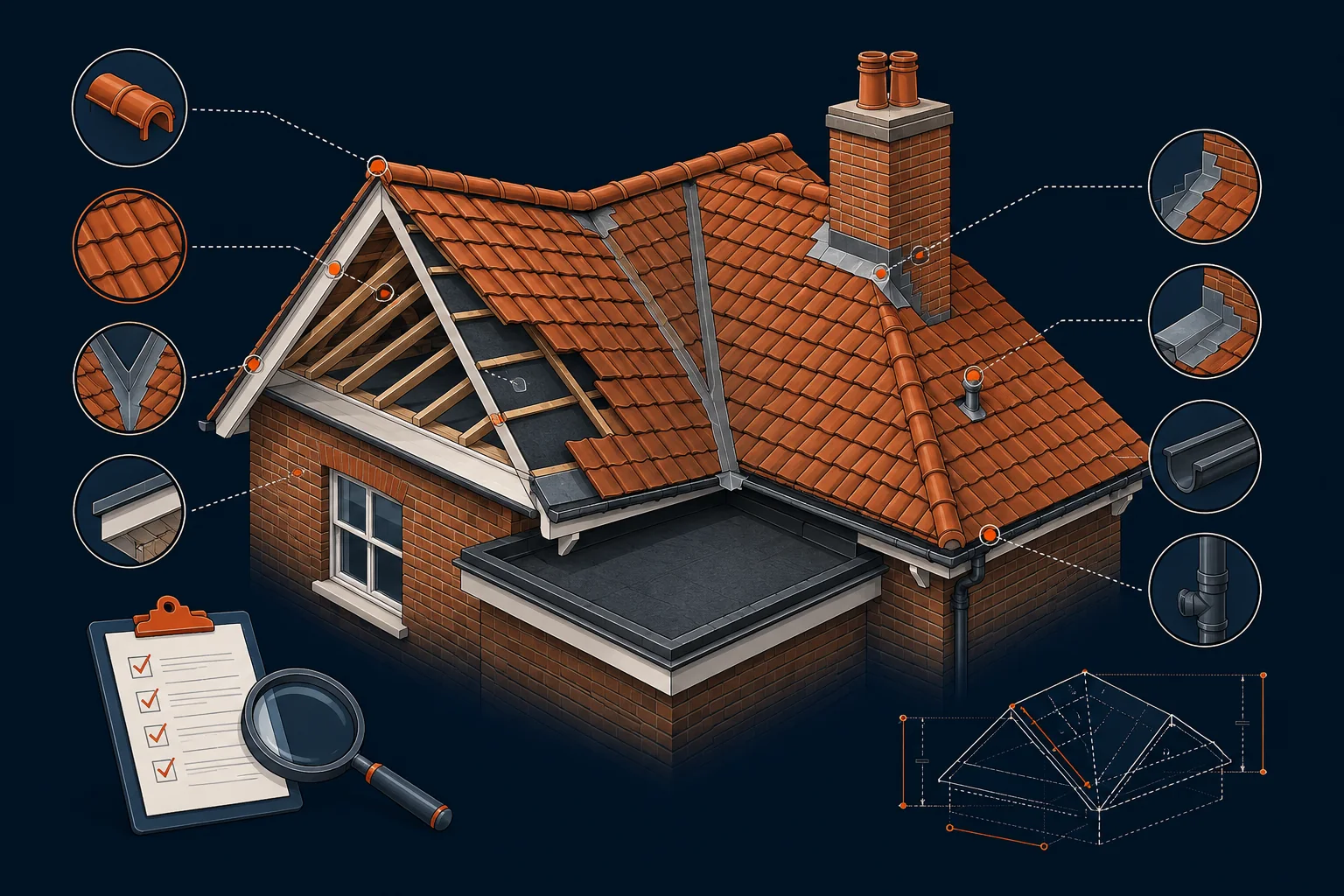
Before any chimney repair is specified, the chimney should be inspected in context with the roof area around it. The assessment needs to identify visible damage, likely points of water entry, and whether the stack, flashing, or mortar joints are failing together.
It is also important to consider whether the issue is localised or part of a wider pattern of wear. A good assessment looks at the condition of the chimney from top to base where possible, so the repair can be based on evidence rather than assumption.
Inspect before specifying the work
A close inspection helps confirm whether the problem is caused by ageing mortar, damaged leadwork, or movement in the chimney structure. Each of those issues points to a different type of repair.
Where access allows, the inspection should also check the upper sections of the stack and the interfaces where the chimney meets the roof. Those junctions are often where small defects become leaks.
The aim is to understand the full condition before any work is agreed. That reduces the risk of overlooking a secondary fault that could affect the result.
Not every chimney defect is visible from the same angle, so the inspection needs to be methodical. Surface cracking may conceal deeper deterioration, and damp marks can reflect a fault elsewhere in the roof detail.
A good assessment looks for clues that show how water is moving through the structure. That can help distinguish between an issue that needs local repair and one that is better solved by more extensive work.
This is especially useful when several parts of the chimney appear worn at the same time. It becomes easier to decide which defects are active and which are simply signs of general ageing.
Once the chimney has been checked, the repair recommendation should follow the actual condition found. That means the solution can range from minor remedial work to more comprehensive rebuilding where deterioration is advanced.
A clear assessment also helps establish what materials and methods are most suitable. Matching the work to the existing construction improves the chance of a consistent finish and a reliable repair.
The result should be a practical scope rather than a generic one. That gives the homeowner a clearer understanding of what the repair is intended to achieve.
What guides the quotation
A quotation should reflect what was found during inspection, not a one-size-fits-all allowance. The extent of damage, the complexity of the chimney, and the likely repair method all influence the scope.
If access is awkward or the repair involves several connected details, the quotation needs to account for that properly. The same applies where the work may include repointing, leadwork, or rebuilding rather than a single isolated fix.
This makes the written price easier to understand and compare. It also helps show how the recommended work follows from the observed condition of the chimney.
Assessment focus
- Inspect the complete stack
- Check the roof junction
- Match the work to the fault
Written scope
- Visible condition
- Safe access
- Material specification
- Relevant exclusions
What Chimney Repairs Can Cover
Chimney repairs can cover a wide range of work, but the right response depends on what the inspection shows. In some cases, a targeted repair to one part of the stack or flashing may be enough; in others, the condition may call for more extensive remedial work.
The service should be scoped to suit the defect, the structure, and the surrounding roof details. That helps ensure the repair is neither under-specified nor more disruptive than necessary.
Suitable chimney repair work may include repointing failing mortar joints, replacing damaged flashing, or renewing defective weatherproofing at the base or top of the stack. These measures are often used when deterioration is present but the structure is still broadly serviceable.
Where the chimney remains structurally sound, focused repairs can restore performance without rebuilding the whole stack. The key is selecting the smallest effective intervention that addresses the cause of the problem.
If several defects are linked, the repair may need to combine more than one method. That is why the condition check matters so much before the scope is confirmed.
When damage is more advanced, chimney repair may shift from maintenance to partial or full rebuilding. That is usually considered where the masonry has become unstable, severely weathered, or no longer suitable for patch repairs.
In those cases, a fuller repair scope can be more practical than repeated small fixes. It allows the defective sections to be replaced in a controlled way and the chimney to be brought back to a sound condition.
The decision should always follow the inspection findings. The objective is to choose a repair method that matches the level of deterioration rather than assuming the same answer for every chimney.
- Masonry, mortar joints, pots and flaunching are considered as parts of one exposed structure.
- The flashing and roof-to-stack junction are checked for a controlled route away from water.
- Local repair, capping or rebuilding is matched to the actual extent of deterioration.
Common Chimney Faults
Common chimney faults often start with ageing mortar, loose masonry, or failed weatherproofing around the stack. These issues can develop gradually, so they may be present before a leak becomes obvious inside the property.
Because chimney defects are exposed to the weather, small signs of wear can progress if they are ignored. A crack that seems minor at first can allow moisture in and contribute to further breakdown over time.
Identifying the fault early makes the repair simpler to plan. It also improves the chance of preventing more extensive damage to the chimney and the surrounding roof area.
A chimney may also show symptoms that point to more than one problem at once. For example, crumbling mortar and damaged flashing can both contribute to dampness even if only one issue is immediately visible.
That is why it helps to look beyond the first sign of failure. Repair planning is more effective when it considers how the different parts of the chimney work together to keep water out.
A layered approach to diagnosis can prevent the wrong part being repaired first. It also supports a more reliable outcome when the defects are connected.
If the chimney has been leaking for some time, the visible damage may be greater than the original fault. Damp staining, loose joints, and worn surfaces can all build up after repeated water ingress.
In those situations, the repair may need to address both the source of the leak and the consequences of the prolonged exposure. That can make the work more involved than a simple surface fix.
The most useful response is to treat the cause and the affected sections together. Doing so helps reduce the chance of the same issue returning soon after the repair.
- Open joints, cracked bricks or weathered masonry faces
- Loose pots or deteriorated flaunching around the chimney top
- Movement at the junction between the stack and roof covering
Chimney Flashing and Flaunching
Chimney flashing is the weatherproof detail that helps seal the junction between the chimney and the roof covering. When it fails, water can enter even if the chimney masonry itself appears sound.
Because this junction is highly exposed, flashing often needs careful inspection during any chimney repair. Small defects can cause recurring leaks if the junction is not properly sealed and integrated with the surrounding roof.
Repairing the flashing at the right time can make a significant difference to the performance of the whole chimney area. It is often one of the first details to check when damp appears near the stack.
Flaunching is the mortar finish at the top of the chimney stack that helps secure and weather the area around the pots. If it cracks or breaks down, water can begin to penetrate the upper structure.
This detail is easy to overlook, but it plays an important role in keeping the top of the chimney stable and protected. Deterioration here can also allow movement or further erosion around the chimney head.
When flaunching is defective, the repair may involve renewing the mortar finish and checking the surrounding masonry at the same time. That helps ensure the top of the stack is properly protected again.
Both flashing and flaunching should be viewed as part of the same weatherproofing picture. A chimney can appear to have only one problem, but the real issue may involve several adjacent details.
For that reason, repairs should not stop at the most obvious fault if surrounding elements are also worn. A joined-up repair reduces the chance of leaving a secondary route for water to enter.
This is especially important where the chimney has already shown signs of repeated leaks. Addressing all the relevant junctions improves the chance of a lasting result.
Good chimney repair work depends on restoring the vulnerable junctions as well as the masonry itself. Once the chimney and roof meeting points are secure, the risk of water entering through those details is reduced.
The exact repair method depends on what has failed and how far the damage has progressed. Some chimneys need only a fresh seal or localised renewal, while others need more substantial work.
A careful specification ensures the repair is suitable for the condition found. That is the best way to avoid both under-repair and unnecessary disruption.
- Step and cover flashing seated securely into the masonry
- Flaunching formed with suitable falls and without open cracking
- Sound interfaces between the stack, tiles or slates and surrounding mortar
Tracing a Chimney Leak
Tracing a chimney leak starts with identifying where water is most likely entering, not just where it becomes visible indoors. Moisture can travel before it shows up as staining or damp patches.
The investigation should consider the chimney stack, the flashing, adjacent roof coverings, and the condition of the mortar and caps. Looking at the whole route helps narrow down the real source of the leak.
This process is important because the visible symptoms can be misleading. A leak near the chimney does not always mean the chimney masonry itself is the only problem.
Leak tracing is most effective when each likely entry point is checked in a logical order. That can help separate a failing roof junction from a problem higher up the stack.
A structured approach also reduces guesswork. Instead of replacing parts that may not be responsible, the repair can focus on the detail that is actually letting water in.
That makes the eventual fix more efficient and more defensible. It also gives the homeowner a clearer explanation of why a particular repair was recommended.
When a chimney leak is being investigated, surrounding roof details should be part of the assessment. Water may enter at a junction, run along a surface, and appear in a different place altogether.
The leak source therefore needs to be traced carefully rather than assumed. A methodical inspection can save time and help avoid repeat visits for the same unresolved issue.
Once the path of the water is understood, the repair can be targeted at the relevant fault. That is usually more effective than treating only the most obvious symptom.
A chimney leak can be caused by failed flashing, degraded mortar, defective flaunching, or movement in the chimney structure. In many cases, more than one of these factors contributes to the problem.
Because of that, the investigation should look for the full set of defects rather than a single isolated issue. The repair scope can then address every relevant weakness in one plan.
This is the best way to improve the chance of a durable result. It also helps keep the work proportional to the actual condition of the chimney and roof junctions.
- Direction and severity of rainfall when the symptom appears
- Moisture route through the stack, roof space or adjoining timbers
- Condition of masonry, flaunching and the roof-to-chimney junction
Repointing, Capping or Rebuilding
Repointing, capping, or rebuilding are different responses to different levels of chimney deterioration. The choice depends on whether the chimney is mainly worn, exposed at the top, or structurally compromised.
Repointing is suitable where mortar joints have broken down but the masonry remains sound. Capping can be appropriate where the chimney top needs protection, while rebuilding is considered when damage is more serious.
The right option should follow the inspection findings. That ensures the repair is based on condition rather than on using the same remedy for every chimney.
A chimney that still has a stable structure may only need repointing to restore weather resistance. If the top of the stack is especially vulnerable, a cap or renewed weathering detail may also be part of the solution.
Where deterioration has moved beyond localised repair, a rebuild may be the more reliable choice. That is often the case when multiple parts of the stack have failed or the masonry has lost strength.
Selecting between these options depends on how much of the chimney can still be retained. A well-judged scope avoids unnecessary replacement while still addressing the underlying problem.
The most suitable repair is often the one that keeps as much sound material in place as possible. That approach can be efficient, provided the remaining structure is genuinely capable of lasting repair.
Where the chimney is in poorer condition, a broader intervention may be more practical than repeated small patches. The decision should be made after checking the full extent of the deterioration.
This balance between conservation and replacement is central to chimney repair planning. It helps ensure the work is both appropriate and proportionate.
A chimney repair plan may combine several measures if that is what the condition requires. For example, repointing alone may not be enough if flashing and the chimney top are also failing.
By matching the scope to the whole defect pattern, the repair can be more reliable. It also avoids leaving behind a weak point that could continue to let water in.
The best approach is the one that resolves the actual fault without adding unnecessary work. That depends on a careful inspection and a clear understanding of the chimney’s condition.
- Local repointing where bricks remain stable and joints have weathered
- Capping or ventilation arrangements for a redundant chimney
- Partial or full rebuilding where movement or masonry failure is extensive
A Chimney Repair Scope Based on Its Condition
Condition
Condition is the starting point for any sensible chimney repair decision. The more clearly the defects are understood, the easier it is to decide whether the chimney needs maintenance, partial repair, or rebuilding.
A poor condition assessment can lead to work that is either too light or too extensive. A sound assessment keeps the repair aligned with what the chimney actually needs.
This helps the homeowner make a more informed choice. It also supports a clearer written quotation because the proposed work follows the observed condition.
Access
Access can influence how a chimney is inspected and repaired. If the stack or roof junction is hard to reach, the method used to complete the work may need to be planned more carefully.
That does not change the underlying defect, but it can affect how the repair is carried out and what areas can be checked thoroughly. Safe and practical access is part of a proper job specification.
A realistic assessment of access helps avoid surprises later. It also ensures the quotation reflects the actual working conditions rather than a simplified assumption.
Specification
Specification is the stage where the inspection findings are turned into a clear repair plan. It should state what will be repaired, how the work will be approached, and where the limits of the job lie.
A good specification avoids vague wording because the details matter on chimney work. The more precise the plan, the easier it is to understand what is included and why.
That clarity is useful for both the homeowner and the roofer. It keeps the repair focused on the defect found and helps set expectations for the finished result.
Chimney Repairs FAQs
Chimneys often leak because water is entering through cracked mortar, failed flashing, damaged flaunching, or worn masonry joints. In some cases, more than one defect is involved, so the visible damp patch may not show the full cause.
A proper inspection is needed to trace the water back to the point of entry. That is the best way to choose a repair that addresses the source rather than just the symptom.
Chimney flaunching is the mortar finish at the top of the stack that helps secure and weather the area around the pots. It protects the top of the chimney by shedding water and holding the upper details in place.
If it cracks or breaks down, moisture can get into the chimney head and contribute to further deterioration. Renewing the flaunching is a common part of chimney maintenance when the top section has begun to fail.
Yes, chimney flashing can often be repaired if the surrounding roof and chimney are still in good enough condition. The repair might involve resealing, renewing sections, or replacing the flashing where it has failed.
The key is to check whether the flashing is the only problem or whether nearby mortar, masonry, or roof details are also contributing. A repair is most effective when it addresses the full defect at the junction.
A chimney usually needs rebuilding when the structure has deteriorated beyond the point where local repairs are reliable. That can happen if the masonry is unstable, badly weathered, or repeatedly failing in several places.
Rebuilding may also be the better option when patch repairs would not provide a lasting result. The decision should be based on the chimney’s condition and the likelihood that smaller repairs would quickly fail again.
Ask about chimney repairs
A written quotation should follow the inspection findings, the materials involved, and the amount of work needed to reach a sound repair. If the chimney has multiple defects, the quote should show how each part of the scope contributes to the overall job.
Access requirements and the chosen repair method can also affect the quotation. Clear scope wording helps you understand what is included and why the proposed work is appropriate for the chimney’s condition.
If you are unsure whether the problem is the chimney itself or a related roof detail, the safest step is to have it assessed before the damage spreads. Early investigation can keep the repair more straightforward.
Chelmer & Slate can discuss the observed condition, explain the likely repair options, and provide a written scope based on what is found. That gives you a clearer basis for deciding how to proceed.